Harper Lange · 2 September 2026
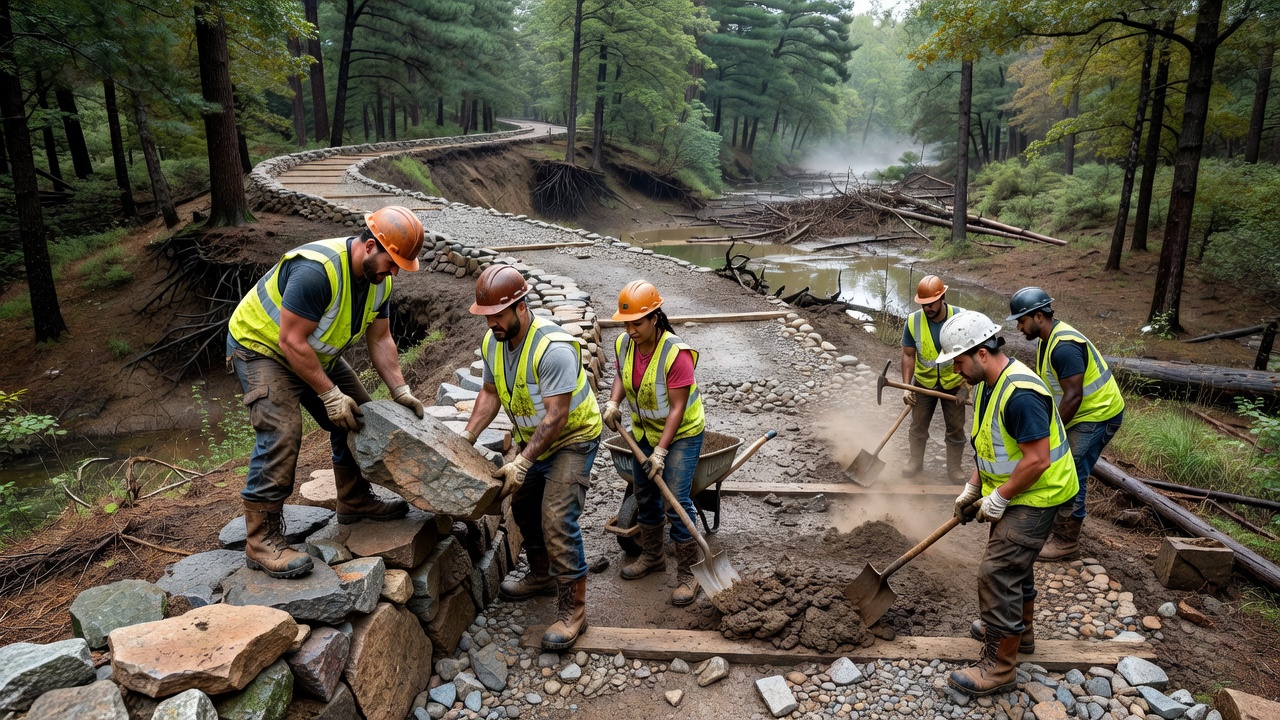
Recent flooding in Fallsridge has prompted extensive recovery work on the community's trail network. Officials report that heavy rains caused erosion, washouts, and debris accumulation across multiple paths, forcing temporary closures. Recovery crews have focused on stabilizing slopes and clearing obstructions while incorporating long-term improvements to reduce future flood risks.
Trail Assessments and Immediate Repairs
Engineers completed surveys of the affected routes within two weeks of the flood event. The most damaged sections included the riverside loop and the ridge overlook trail, where water undermined footbridges and removed large portions of the surface. Repair teams have replaced culverts, reinforced retaining walls, and added gravel layers to restore usability. Local volunteers assisted with debris removal, allowing several shorter loops to reopen ahead of schedule. Officials emphasize that all work follows updated environmental guidelines to protect nearby waterways.
Residents have been advised to use only marked open trails while crews continue work on remaining segments. Temporary signage directs users around active construction zones. The parks department has installed additional drainage features such as French drains and check dams to manage runoff more effectively during storms.
Long-Term Trail Redesign Plans
Planners are using the recovery period to reshape the network for greater resilience. New trail alignments will avoid low-lying flood-prone areas, and several paths will be elevated on boardwalks. Native vegetation is being planted along shoulders to stabilize soil and improve water absorption. Community input sessions helped prioritize routes that serve both recreational and commuting needs. Funding for the project combines federal disaster assistance with local bond measures approved earlier this year.
Completion of the full redesign is expected by early next spring. Updated maps will be available at trailheads and on the community website once all sections are finalized. Officials note that these changes should make the network safer and more sustainable for years to come.